
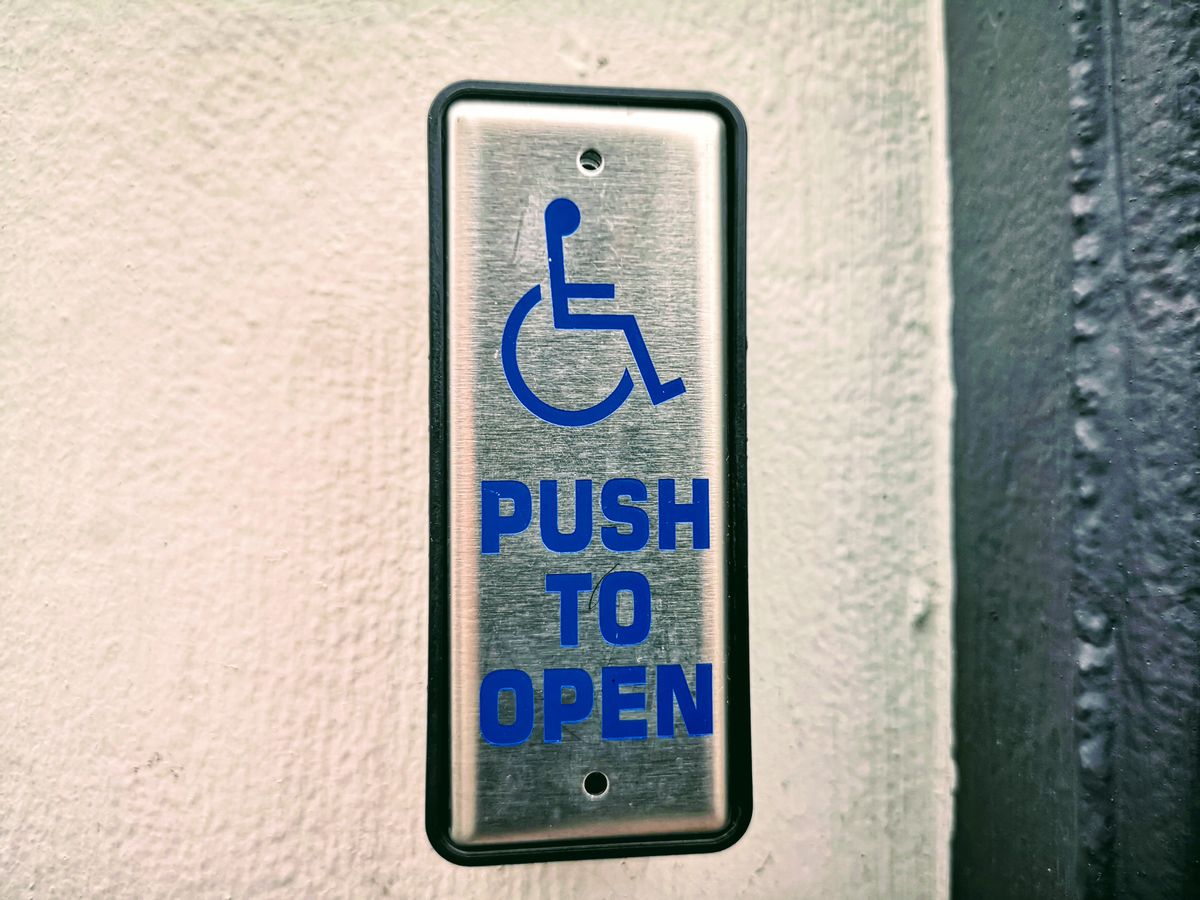
An accessible public toilet facility. Changing Places toilets go further: they include adult-sized changing benches, ceiling hoists, and sufficient space for a carer. Around 250,000 people in the UK need these facilities to use public spaces safely. Photo: Pexels (free to use).
On 16 July 2026, MPs gathered in Westminster Hall to debate the state of Changing Places toilet provision across the UK. The Westminster Hall debate on Changing Places capital funding covered what it actually means when these facilities don't exist: days out abandoned, visits cut short, people with complex disabilities changed in unsafe or undignified conditions.
The Government didn't announce a new ring-fenced capital fund. The Minister acknowledged that the rate of new provision has slowed since an earlier programme ended, while maintaining that local authorities are best placed to make spending decisions.
What struck me most, though, wasn't the funding debate. It was a point that kept surfacing throughout the discussion: an accessible facility that's locked, poorly maintained, unadvertised, or impossible to locate is functionally unavailable. You can install the equipment, tick the box on a building survey, and still leave a disabled customer with nowhere to go.
That gap between physical provision and operational delivery is exactly where venues need to focus. And it's where the Equality Act 2010 has more to say than most organisations realise.
What Changing Places toilets actually are
A standard accessible toilet isn't adequate for everyone. Some disabled people, including many wheelchair users and people with complex physical needs, require more space, a height-adjustable adult-sized changing bench, and a ceiling or mobile hoist. That's what a Changing Places facility provides.
The Changing Places campaign estimates that around 250,000 people in the UK need these facilities to use public spaces safely and with dignity. Without them, attendance at a concert, a football match, a theatre performance, or a festival isn't just uncomfortable: it can be physically impossible. MPs in the July 2026 debate described families who'd had people changed on the floor of public toilets, or who'd simply stopped going out altogether.
Building regulations in England now require Changing Places facilities in certain new buildings above a specified size threshold. Many existing venues don't have them. And even where they exist, they're often hard to find, kept locked, or inadequately maintained.
Clear, visible signage is part of operational accessibility: a facility that exists but can't be found doesn't serve the people who need it. Photo: Jan van der Wolf / Pexels (free to use).
What the Equality Act actually requires
Here's where I need to be precise, because I see this misunderstood constantly.
The Equality Act 2010 doesn't impose a blanket rule that every service provider must install a Changing Places toilet. Whether a particular adjustment is reasonable is always fact-sensitive: it depends on the nature of the service you provide, the disadvantage experienced by disabled people, the effectiveness of the proposed adjustment, practicality, cost, and available resources.
But building regulations compliance doesn't end the enquiry under the Act. Building standards and the Equality Act do different jobs. Meeting current building regulations doesn't mean you've satisfied your obligations as a service provider.
Under sections 20, 21, and 29 of the Equality Act 2010, service providers have a duty to make reasonable adjustments to remove barriers that put disabled people at a substantial disadvantage compared to non-disabled people. Crucially, that duty is anticipatory: organisations should be thinking in advance about barriers that disabled customers are likely to face, not waiting until someone complains or brings a claim before acting.
So the question isn't simply “have we installed a Changing Places toilet?” The question is: “have we genuinely assessed the barriers our disabled customers are likely to face, considered what adjustments would be reasonable, and acted on that assessment proactively?”
The anticipatory duty means you're expected to think about barriers before they become complaints, not after.
Reasonable adjustments as a risk assessment, not a checkbox
The right mental model for this isn't “do we have a Changing Places toilet: yes or no?” It's a risk assessment, and it should be documented.
That assessment should work through questions like:
- What does the evidence tell us about the disabled people likely to use this venue, and the barriers they're likely to encounter?
- Is there space in the building that could be repurposed or reconfigured to accommodate a Changing Places facility?
- If full permanent installation isn't currently feasible, what mitigation is available in the interim?
- For events, temporary venues, or outdoor festivals: are there specialist hire options that can fill the gap while longer-term plans are developed?
On that last point: suppliers like Mobiloo provide mobile Changing Places toilet units for hire. For outdoor events, festivals, temporary venues, or situations where permanent installation is being planned but hasn't yet completed, a hired mobile unit can be a genuinely reasonable adjustment. It won't suit every situation, but it demonstrates that the organisation has assessed the need and acted on it, rather than simply concluding the problem is too difficult.
The documentation matters just as much as the action. If you've genuinely worked through the options, recorded your reasoning, and implemented the most reasonable adjustment available given your circumstances, that's a far stronger legal and reputational position than doing nothing and hoping the question never gets asked.
Five questions every venue operator should be able to answer
What does the evidence say about the disabled people likely to use this venue, and the barriers they're likely to encounter? Not assumptions: actual evidence from customer data, access audits, consultation with disabled people's organisations, or sector research.
Are existing accessible facilities genuinely available throughout the customer journey and operating hours? Not just installed: staffed, maintained, unlocked, and accessible at every relevant point in the event.
Can customers obtain accurate information about your facilities before they decide whether and how to travel? Pre-visit information is part of the service. A customer who can't find out in advance whether a facility exists may simply not come.
What contingency arrangements apply when equipment, lifts, toilets, or other access facilities are unavailable? Breakdowns happen. What's your plan, and who knows about it?
Who owns accessibility operationally, across estates, events, security, customer services, and senior management? Accessibility without clear internal ownership is nobody's responsibility in practice.
The operational gap that physical audits don't close
A traditional access audit tells you about physical dimensions: door widths, reach ranges, gradient, floor finishes. That information is valuable and necessary. It doesn't tell you whether the accessible toilet is locked when a customer arrives at 7pm on a Saturday, whether the hoist was serviced last month, whether front-of-house staff know where it is, or whether the website says anything useful about it at all.
Operational accessibility includes opening hours, maintenance schedules, staff knowledge, signage, website information, and contingency planning. An operational review asks: what information did the customer receive before booking? What happens on arrival? Are access arrangements maintained throughout an event? Can problems be escalated quickly when something goes wrong?
For large concerts, football matches, music festivals, and temporary events, the picture is even more complex: multiple organisations are involved in delivery, but the disabled customer experiences one event. Accessibility governance has to operate across organisational boundaries, not just within them. Whether you're running a Sheffield venue, a national stadium, or a touring festival, the disabled customer's experience doesn't care about the internal contracting structure.
A customer who can enter a building but can't remain there with dignity may still be excluded from the service. That's what the anticipatory duty asks you to think about.
What the parliamentary debate means in practice
The July 2026 Westminster Hall debate won't, by itself, produce a new national capital fund for Changing Places provision. Government funding cycles don't move that quickly, and the policy position remains that local authorities make their own spending decisions.
What the debate does is put the issue back in the public and political eye. It gives disabled people and their families language to use when engaging with venues. And it reinforces the legal context: the anticipatory duty under the Equality Act didn't wait for parliament to debate it, and it doesn't require a new grant scheme to be enforceable.
Venues that use the debate as a prompt to carry out their own assessment and document it properly are in a better position whatever happens next. Those that wait are accumulating risk.
About the author
Chris Fry leads Strategic Access Advisory Limited, a specialist accessibility consultancy based in Sheffield. Chris has decades of experience in Courts, including the Court of Appeal and Supreme Court, translating the Equality Act 2010 into operational improvements for venues, sports organisations, entertainment companies, and live events businesses.
Chris Fry works with organisations across sport, music, entertainment, and live events to carry out compliance audits, design training programmes, and provide insurance-backed retainer support. The work bridges legal risk, policy mapping, and customer experience, helping decision-makers understand not just what the law requires but how to deliver it in practice.
For enquiries about Changing Places assessments, operational accessibility reviews, or subscription support, contact Strategic Access Advisory Limited directly via strategicaccessconsulting.com.
Sources and references
- UK Parliament, Hansard, “Changing Places Toilets: Capital Funding”, debated 16 July 2026: hansard.parliament.uk
- Changing Places campaign: changing-places.org
- Mobiloo (mobile Changing Places hire): mobiloo.org.uk
- Equality Act 2010, sections 20, 21, and 29
- Equality and Human Rights Commission guidance on the anticipatory reasonable-adjustments duty for service providers
This article provides general legal and operational information and isn't legal advice on any particular circumstances. If you need advice on your organisation's specific situation, seek independent legal counsel.