
Guides & Articles
Practical, legally grounded guidance on the Equality Act 2010 — written for venues, operators, and customer experience teams.
I'm Still Standing
Managing Queuing at Events for Disabled People — the Law, the Systems, and What Venues Get Wrong
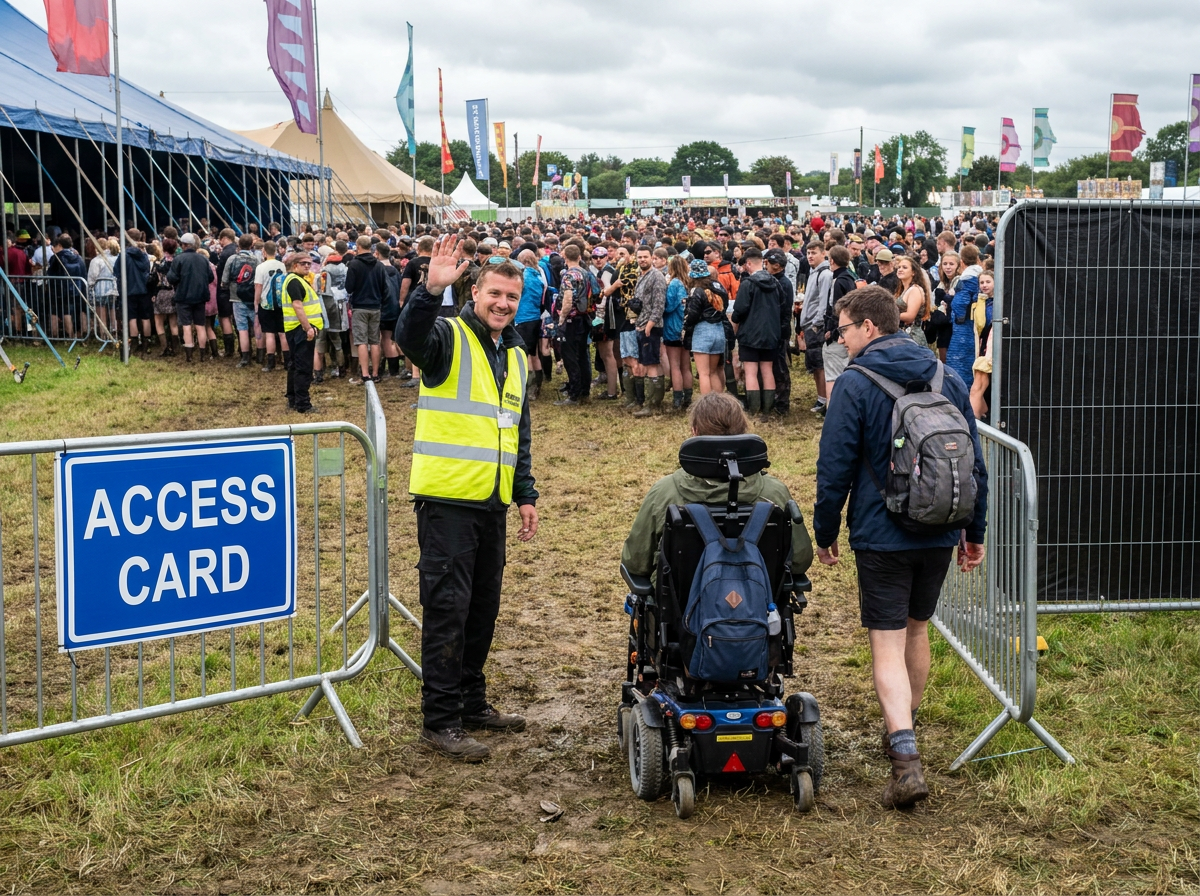
No one likes queuing. But for a significant number of disabled people, a standard queue isn't just uncomfortable — it can be medically intolerable, humiliating, or genuinely dangerous.
Priority and alternative queue access for disabled people isn't “queue jumping.” Under the Equality Act 2010, it's frequently a legal requirement — anticipated in advance, not delivered on request. The duty is anticipatory: you're expected to think ahead and remove barriers before anyone asks.
This article covers the legal framework, key case law — including a Court of Appeal award of £7,500 for making a disabled passenger stand in a queue — verification systems, sector-specific examples, and a self-scoring checklist your team can use today.
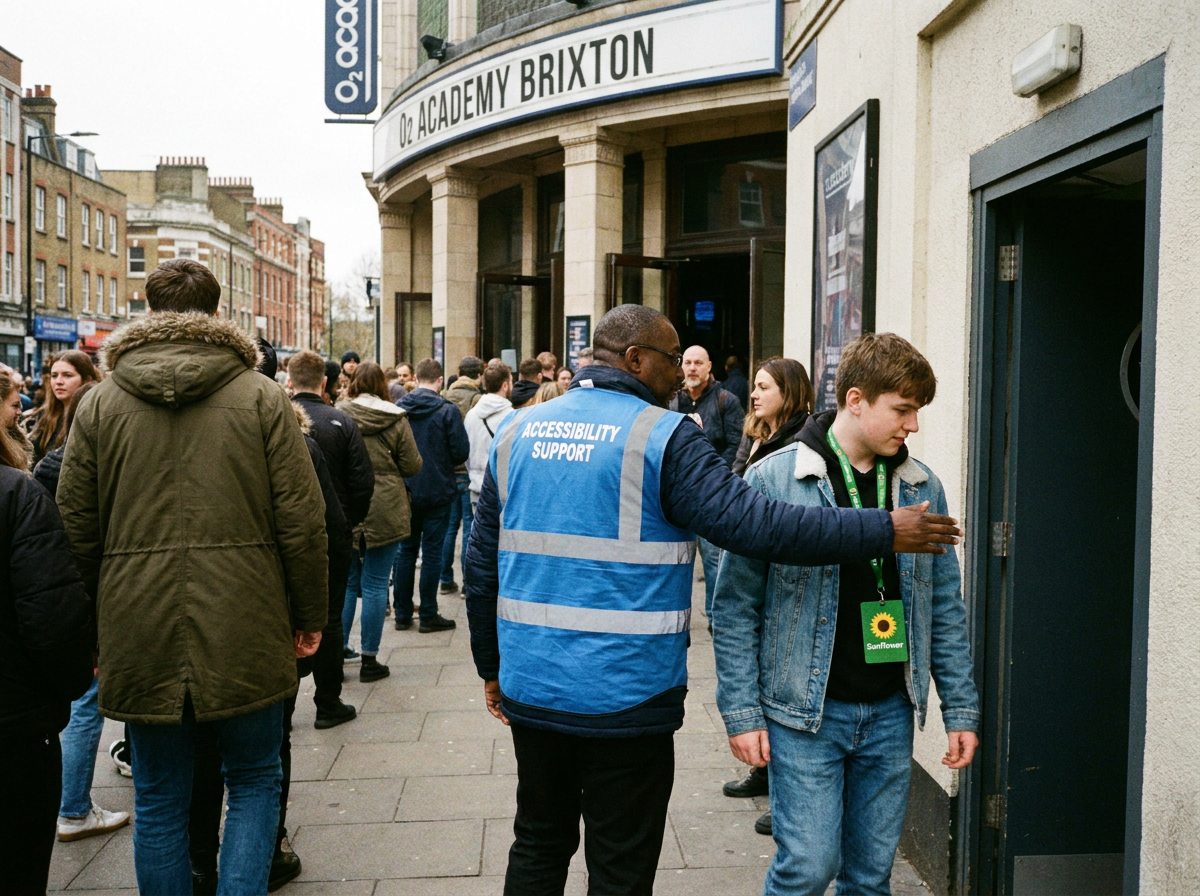
Over 70% of disabled people have a non-visible disability. Is your queue provision designed for them?
What's covered
- Why priority queue access for disabled people is a legal requirement, not a courtesy — and what the anticipatory duty actually means
- Key case law: Campbell v Thomas Cook (£7,500 Court of Appeal award), FirstGroup v Paulley (Supreme Court), and the EHRC enforcement action against Live Nation
- The full range of disabilities that matter for queuing — mobility, hidden disabilities, toileting conditions, and anxiety
- Verification systems in depth: Access Card, Sunflower Lanyard, WelcoMe, NHS letters, and venue-issued passes
- Queue management in practice: theme parks, airports, festivals, sports venues, and West End theatres
- Signage and communications — what good looks like before, during, and after the event
- Evacuation planning for disabled guests — the biggest gap most venues have, and the legal requirements that apply
- Four failure scenarios with legal analysis: the companion exclusion, the 'doesn't look disabled' refusal, the neurodiverse guest who leaves, and the social media incident
- A self-scoring checklist for venues to assess their current provision
Sector examples covered
FestivalsGlastonbury's Accessible Village sets the benchmark. Leeds, Reading, Download, and BST Hyde Park operate at varying levels of maturity — consistent gaps are inadequate staffing at access points, insufficient toilet provision, and poor pre-event communication.
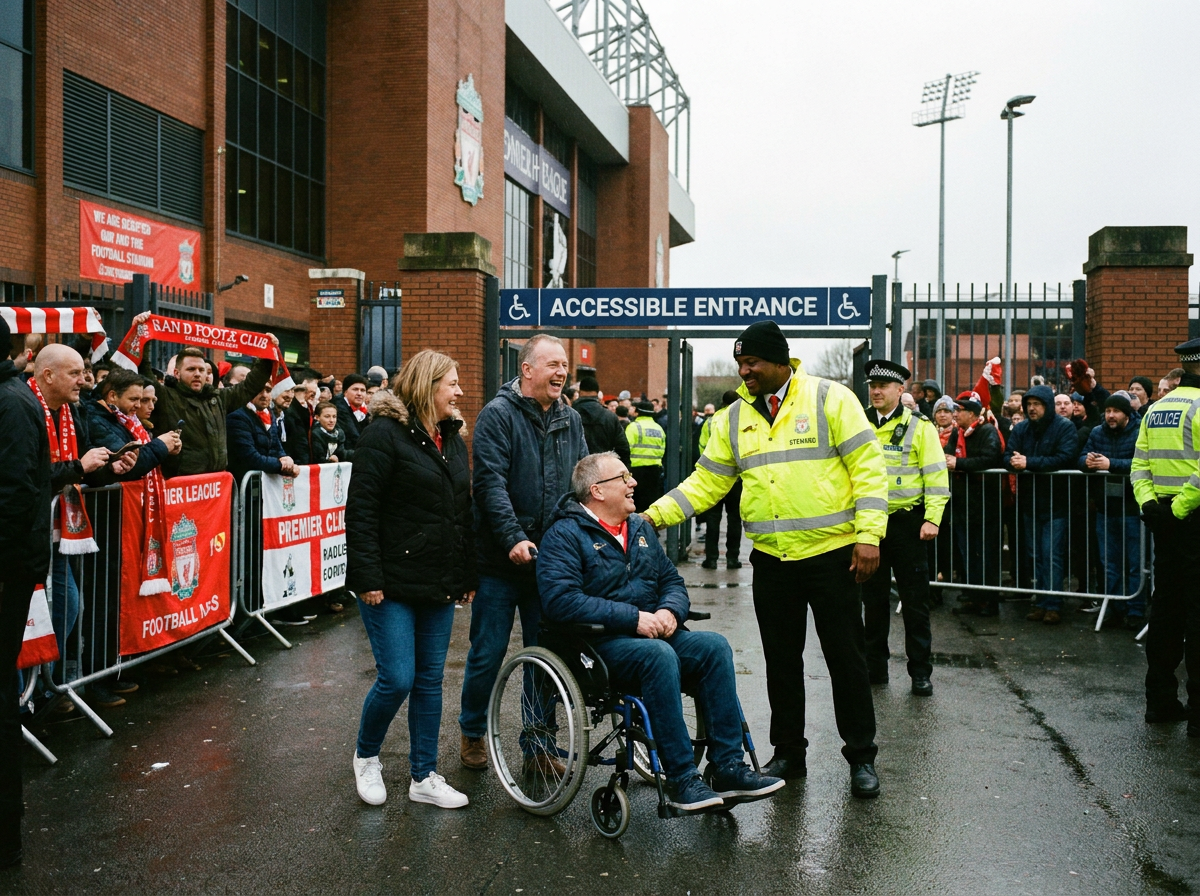 Sports Venues
Premier League and Championship grounds operate under FA and SGSA guidance. Persistent flashpoints: companion ticketing disputes, accessible entrance queue management, and absent steward support at access points on matchdays.
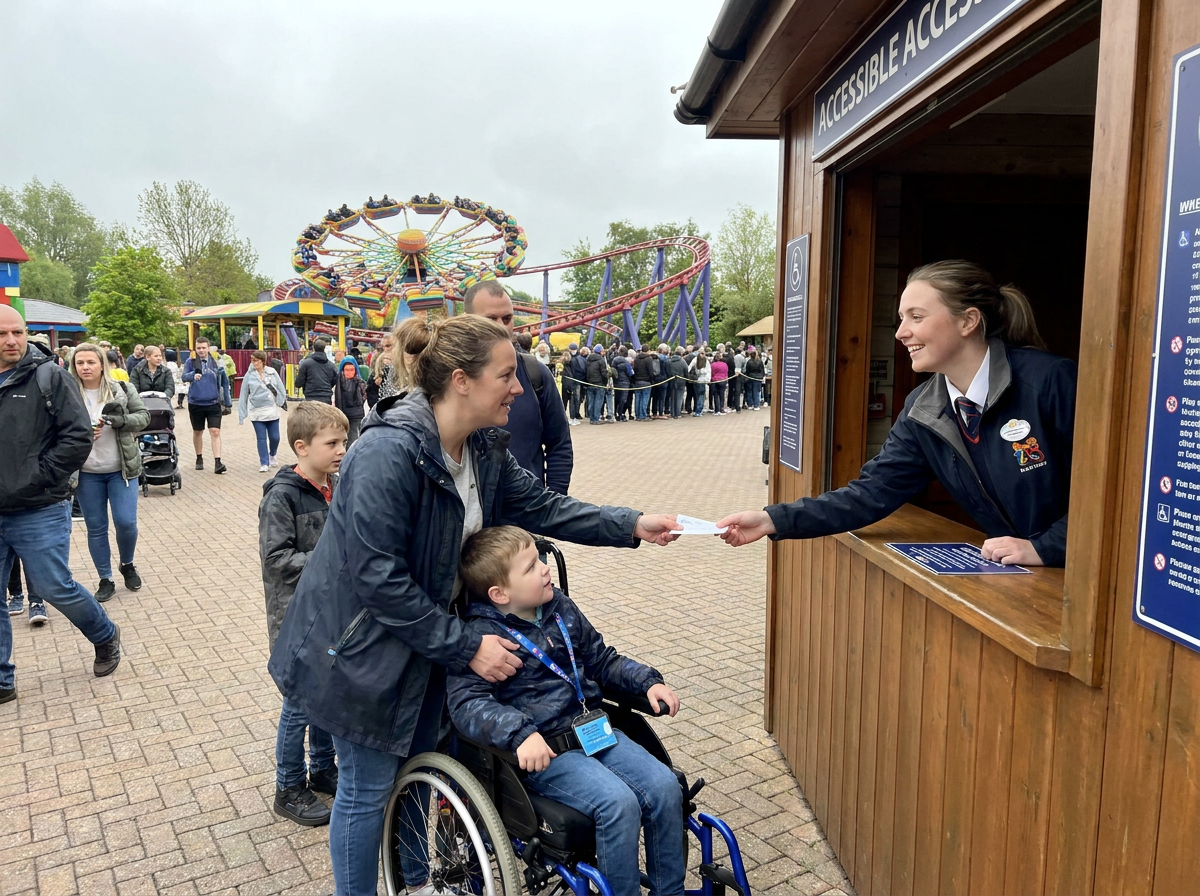 Theme Parks
Merlin Entertainments and Disney operate some of the most developed access systems in UK leisure. Return time allocation rather than queue bypass reduces visual friction — but systems need flexibility for guests with unpredictable energy levels or pain.
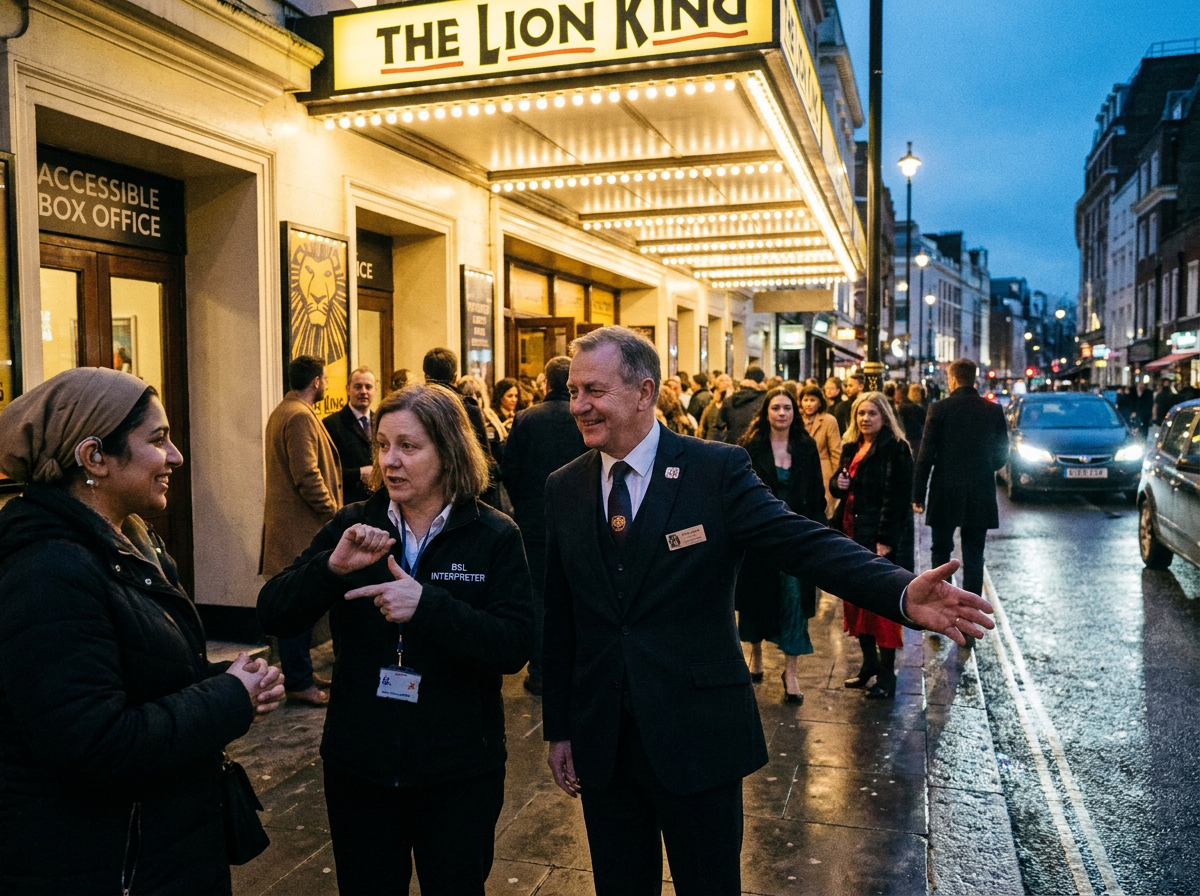 Theatre & Concerts
Major West End houses have accessible booking systems and box office queue adjustments. The principal gap across the sector is companion policy consistency and staff training — managers are too often called to handle situations that should never have escalated.
Accessible Queuing Self-Assessment
Seven sections, 38 questions, scored in under 20 minutes. Find out where you stand on legal foundation, verification systems, signage, staff training, and evacuation — before a complaint does it for you.
Take the self-scoring checklistCommon questions
Is it legal to give disabled people priority queue access?
Yes — and in many cases, it's legally required. The Equality Act 2010 imposes an anticipatory duty on service providers to make reasonable adjustments for disabled people. A standard queue creates a foreseeable barrier for disabled guests who can't stand, have urgent toileting needs, or experience genuine distress in crowded environments. Priority or alternative access is a reasonable adjustment, not a favour.
What if non-disabled guests object to disabled people using a priority queue?
Non-disabled guests can't reasonably object to access provisions that fulfil a legal duty. The Supreme Court confirmed in FirstGroup v Paulley [2017] UKSC 4 that disability priority takes precedence over the convenience of non-disabled users. Staff should respond calmly and factually: 'We provide alternative access for guests with disabilities — this is part of how we make the event accessible for everyone.' They shouldn't apologise for the policy or debate it.
Which verification systems should we accept at our venue?
The Access Card (Nimbus Disability) is the closest thing to an industry standard in UK live events and leisure — it confirms functional needs without disclosing diagnosis. The Sunflower Lanyard is a useful awareness indicator but should prompt a proactive, discreet conversation rather than automatic access provision. NHS letters are problematic as primary evidence and shouldn't be your main system.
What are the biggest legal risks for venues that get queuing wrong?
The clearest precedent is Campbell v Thomas Cook [2014] EWCA Civ 1668 — a Court of Appeal case where a disabled passenger was awarded £7,500 because staff failed to provide a chair in a queue. More recently, the EHRC entered a legally binding section 23 enforcement agreement with Live Nation and Festival Republic following systemic access failures at Wireless 2022 and Download 2023. The failures that generate these outcomes are typically simple and foreseeable, not complex or intentional.
Chris Fry
Director, Strategic Access Advisory Limited
Download the article
Enter your details below to receive the full article. We'll occasionally send relevant updates — no spam, unsubscribe any time.
This article is provided for information only and does not constitute legal advice. For venue-specific advice, contact us.
Also in our resources library
Plus One - No Problem
Companion ticketing under the Equality Act 2010 — who should be admitted, who should pay, and what eight case studies across football, rugby, theatre and festivals tell us.
Read Plus One - No Problem