
Guides & Articles
Practical, legally grounded guidance on the Equality Act 2010, written for venues, operators, and customer experience teams.
Priority Queue Access for Disabled People
Four anonymised case studies from sport, music, theatre, and leisure examine where operators are getting it wrong, and what the law requires them to do.
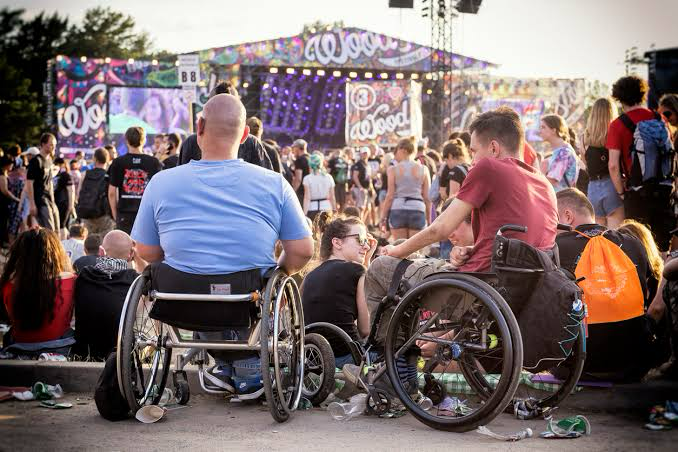
There is still confusion in venues and event operations about this: priority queue access for disabled people is not “queue jumping.” Under the Equality Act 2010, it is frequently a legal requirement, anticipated in advance and put in place before anyone has to ask.
The Supreme Court confirmed the principle in FirstGroup v Paulley [2017] UKSC 4. The case involved a wheelchair user on a bus and a priority space that another passenger refused to vacate. The Court held that the operator had a duty to go further than merely asking; disability priority is not optional and cannot be overridden by social convention or the preferences of other customers.
Your queue management policies, your staff instructions, your physical infrastructure: all of it sits under the same anticipatory duty. The failures we examine in this guide are not rare. They are happening, in recognisable venues, to recognisable customers, with foreseeable legal consequences.
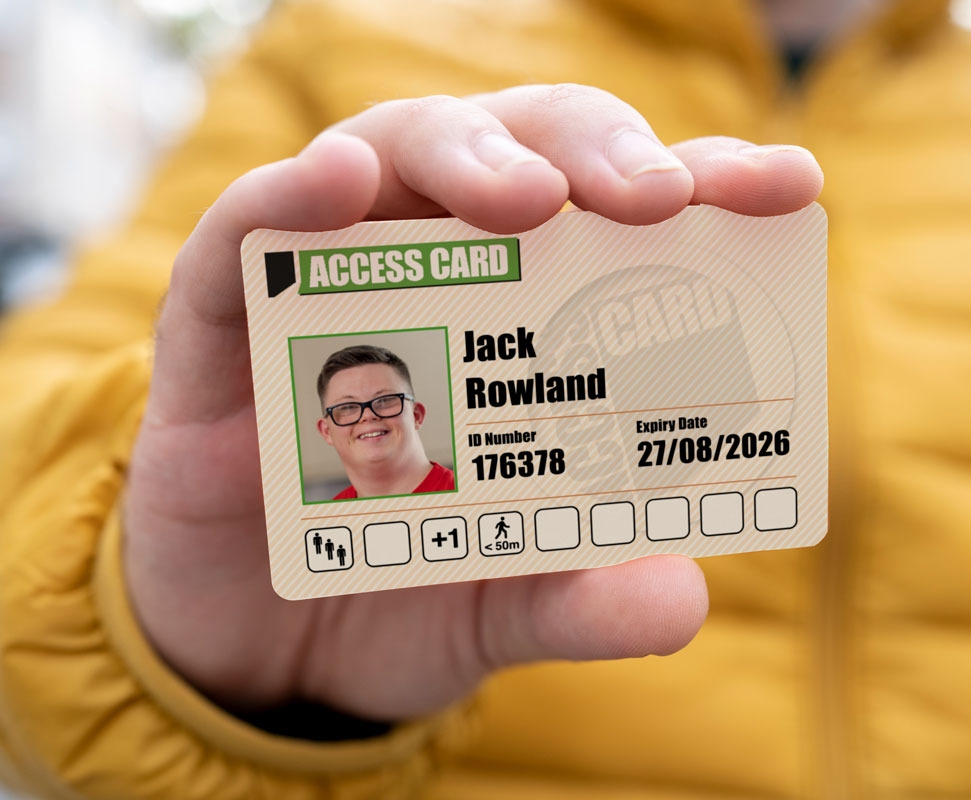
Over 70% of disabled people have a non-visible disability. Is your queue provision designed for them?
What this guide covers
- Why priority queue access is a legal requirement under the Equality Act 2010, not a discretionary courtesy
- What the anticipatory duty means in practice: you are expected to act before a disabled person arrives and asks
- The full range of conditions that make a standard queue a barrier, including hidden disabilities, toileting conditions, chronic pain, and anxiety
- Four anonymised case studies from Championship football, a major summer festival, a West End theatre, and a UK theme park
- The legal position in each case study: where the anticipatory duty applied and how it was breached
- What outcomes each organisation reached and what systemic changes they made
- Verification systems: Access Card, Sunflower Lanyard, and what your staff should do with each
- What a defensible queue access policy looks like: staffing, signage, escalation, and pre-event communications
- Common questions answered: non-disabled guest objections, evidence requests, return time systems, and hidden disability
The legal foundation
The Equality Act 2010 imposes what lawyers call the “anticipatory duty” on service providers: an obligation to think ahead and remove foreseeable barriers before a disabled person has to ask. You are not entitled to wait until a disabled customer arrives and encounters a problem.
A standard queue creates a foreseeable barrier for a significant number of disabled people: those who cannot stand for extended periods, those with urgent and unpredictable toileting needs, those with anxiety conditions who find crowded, pressurised environments genuinely distressing, and those with chronic pain conditions that are worsened by prolonged standing. These conditions are mostly non-visible, and all of them are covered by the Act.
The clearest financial precedent remains Campbell v Thomas Cook [2014] EWCA Civ 1668, a Court of Appeal case in which a disabled passenger was awarded £7,500 because staff failed to provide a chair while she waited. More recently, the EHRC entered a legally binding section 23 enforcement agreement with Live Nation and Festival Republic following systemic access failures at Wireless 2022 and Download 2023. The consequences are financial, reputational, and regulatory, and the failures that generate them are typically simple and foreseeable, not complex or deliberate.
The anticipatory duty in plain terms
You must think about disabled people before they arrive. Assess the barriers in your queue process. Put reasonable adjustments in place. Make sure they actually work on the day. If you wait for a disabled customer to arrive and ask for help before you act, you are already in breach.
Who is affected: not just wheelchair users
One of the most common errors in queue access policy design is scope. Many venues have access provision that responds to visible mobility aids, and little else. The following conditions all create legitimate, legally relevant barriers in a standard queue:
ME/CFS and chronic fatigue
Extended standing causes significant deterioration
Crohn's disease and IBD
Unpredictable, urgent toileting needs
Anxiety and PTSD
Crowded, pressurised environments are genuinely distressing
Chronic pain conditions
Including fibromyalgia, arthritis, and musculoskeletal conditions
Autism and sensory processing
Queuing environments can be overwhelming and intolerable
Cardiac and respiratory conditions
Sustained activity in queuing is medically significant
Over 70% of disabled people have a non-visible disability. A queue access policy that only responds to visible mobility aids is not a policy that meets the anticipatory duty. It is a policy that serves a minority of the people who need it.
Four case studies
The following cases are anonymised and composite. They reflect patterns of failure that appear consistently across sectors: structural problems that well-resourced organisations with written policies are still making.

Championship Football Club
Football
The situation
A disabled supporter with a hidden pain condition queued for 25 minutes at a designated accessible entrance on a wet January matchday. The access steward had been reassigned elsewhere. No signage directed her to an alternative. Her companion asked a nearby general steward, who told them to rejoin the standard queue. She left without entering.
Legal position
The club's accessible ticketing policy documented the entrance as staffed and signposted, but implementation relied on a single steward whose position was regularly reassigned at busy periods. Under the anticipatory duty, the obligation is to ensure the adjustment actually works before a disabled person arrives.
Outcome
The supporter raised an informal complaint. The club added a pre-opening accessible infrastructure check to its steward briefing, assigned a named deputy for access steward cover, and introduced a text notification for disabled ticket holders if accessible entrance arrangements changed on the day.
Major Summer Music Festival
Festivals
The situation
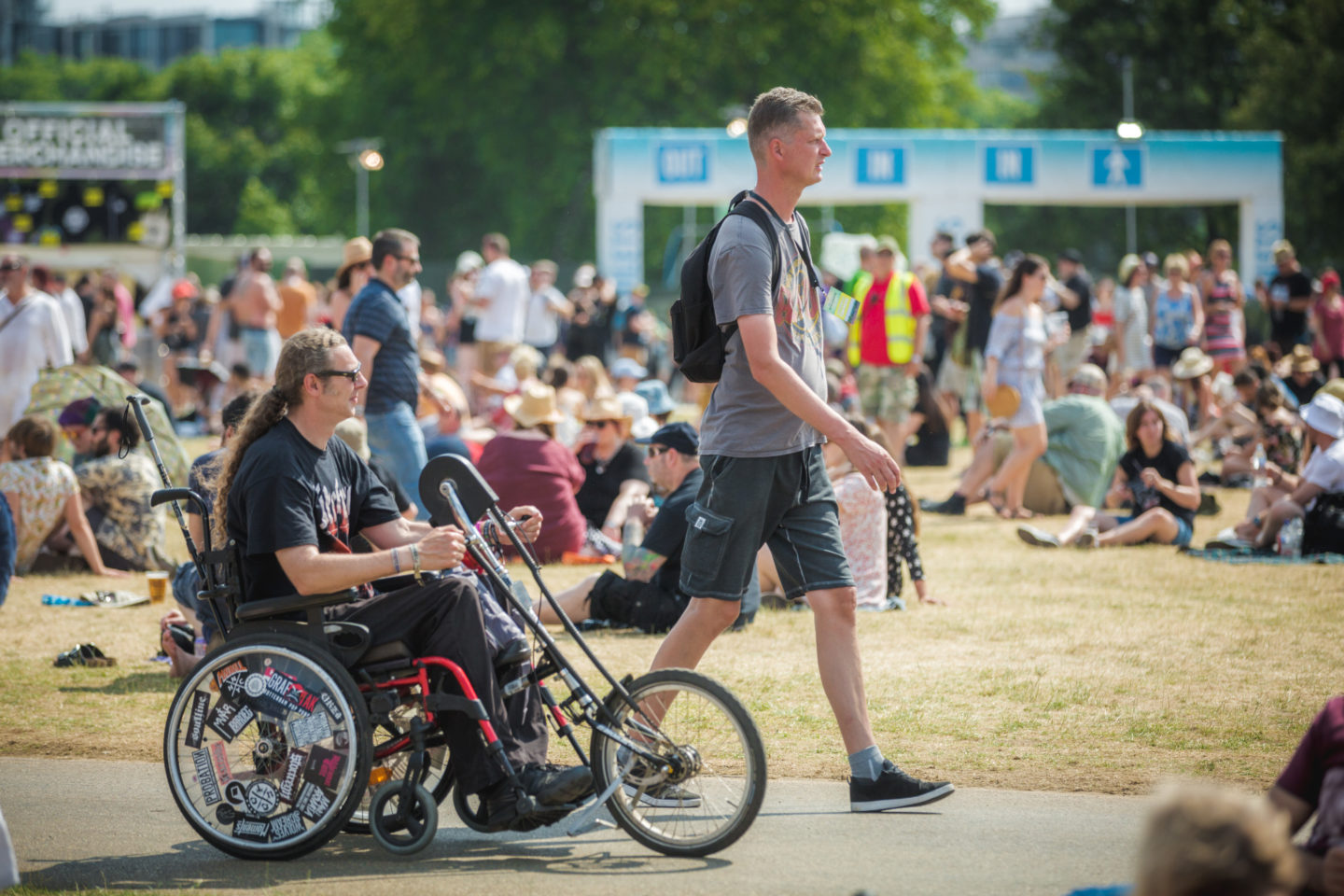
A 50,000-capacity festival received an EHRC inquiry following social media complaints. The festival operated a separate accessible viewing area but required disabled attendees to queue at the same access gates as general admission. Staff at the accessible gate were inconsistent: some operated a separate lane, others directed disabled attendees into the main queue when the gate became busy.
Legal position
The staff briefing documents referred to an 'accessible queue' but did not define where it was, how it was staffed, or what to do when the access steward needed a break. Whether a disabled attendee received priority access depended on which individual staff member they encountered. That kind of systemic inconsistency is exactly the failure mode the anticipatory duty is designed to prevent.
Outcome
The operator entered into a detailed remediation plan: pre-event accessible queue mapping, dedicated access stewards trained to hold position during peak entry periods, and a direct contact number for disabled attendees experiencing access difficulties on the day.
West End Theatre
Theatre
The situation
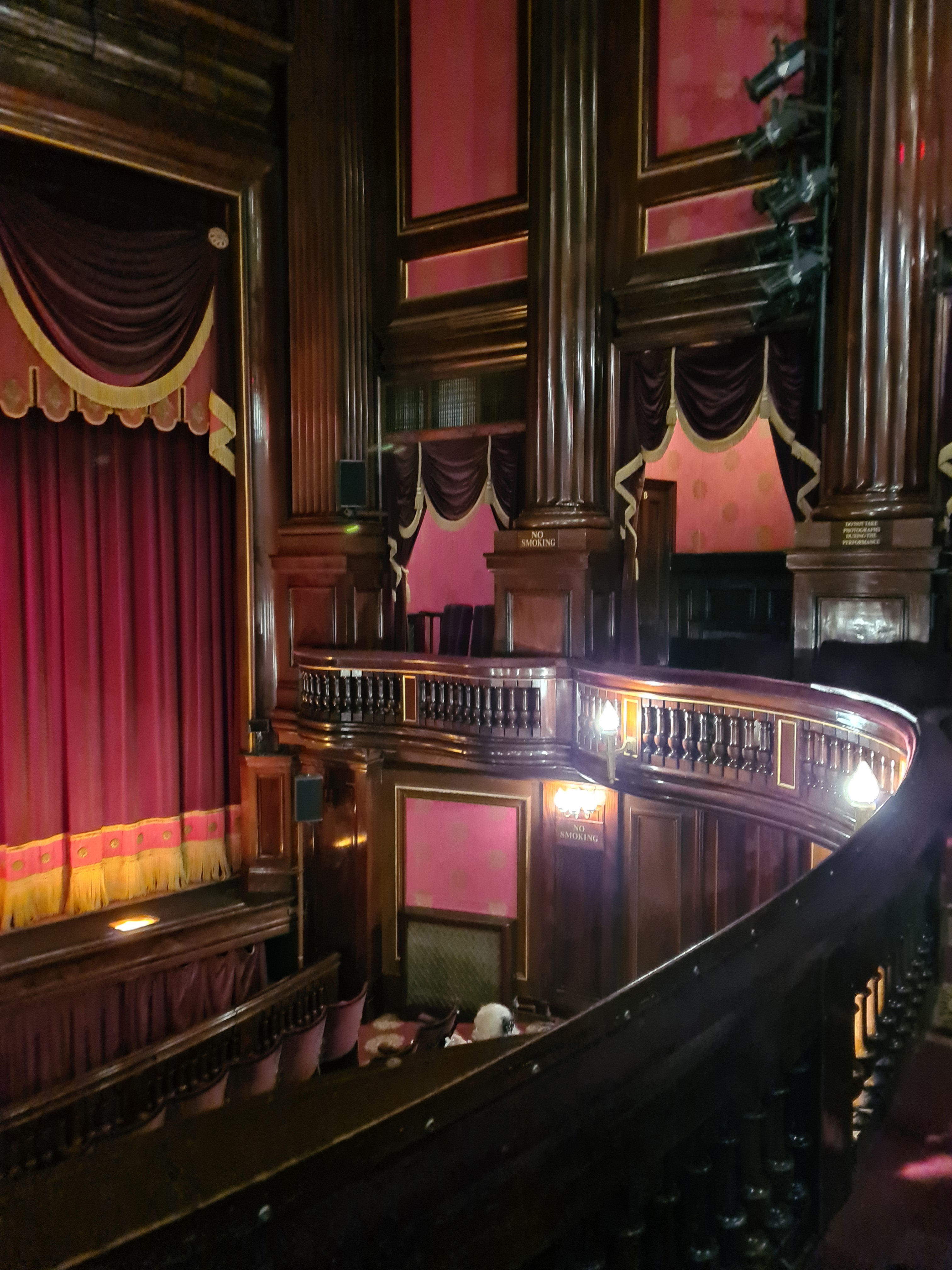
A theatregoer with ME/CFS and episodic mobility difficulties arrived at a long-running West End show to find the accessible entrance locked. A front-of-house staff member directed her to the main entrance queue — a flight of steps and 30 metres further. Her companion challenged this. The staff member said the accessible entrance was for 'wheelchair users only.' The theatre's actual policy permitted all disabled customers to use it.
Legal position
Where a service provider's written policy is not implemented by its staff, the failure is the service provider's, not the individual staff member's. Misdirecting a disabled customer to a less accessible route, based on a misreading of who qualifies, constitutes a failure to make a reasonable adjustment under Section 20.
Outcome
The theatregoer sent a letter before action. The theatre settled without proceedings, reviewed its front-of-house training on eligibility for the accessible entrance, and added accessible entrance information and eligibility criteria to its booking confirmation emails.

Major UK Theme Park
Theme Parks
The situation
A family visiting a major theme park used its return time system for accessible queue access. The system worked well for predictable needs. However, the family included a child with a toileting disability requiring unplanned access to facilities. On three occasions the child's return time lapsed due to an unplanned toilet visit. Each time, the family had to request a manual supervisor override. On the third occasion, the supervisor refused a further override and told them to 'plan better.'
Legal position
A return time system that works for predictable needs but fails guests with episodic or unpredictable conditions does not discharge the anticipatory duty for the full range of people it is designed to serve. The system must be flexible enough to accommodate conditions that are, by their nature, not predictable.
Outcome
The park introduced a 'medical flexibility' category within its accessible queue system, allowing guests with documented unpredictable conditions to request a return time reset without supervisor escalation. The supervisor's comment was addressed in a complaint review.
What a defensible queue access policy looks like
The case studies above share a common pattern: the organisation had a written policy, but the policy was not implemented reliably. Across all four, the accessible queue process was not visible, not consistently staffed, not communicated before arrival, or not designed for the full range of people it was supposed to serve.
Infrastructure check before gates open
Every accessible entrance and queue lane must be confirmed as operational before disabled customers begin arriving. This must be a named item on the matchday or event-day briefing, with a named responsible person. 'It was usually fine' is not a system.
Named cover for access steward positions
An accessible entrance staffed by a single steward who can be reassigned is not, in practice, an accessible entrance. Every access position must have a named deputy and a protocol for notifying disabled customers if the provision is temporarily unavailable.
Policy eligibility communicated before arrival
Disabled customers should not have to discover how your queue provision works when they arrive at the gate. Eligibility criteria, access routes, and the process for requesting assistance should appear in the booking confirmation, on the venue website, and at the point of ticket purchase.
Staff training that goes beyond awareness
Knowing that disabled people can use the accessible entrance is not the same as knowing who qualifies, how to respond to a Sunflower Lanyard, what to do when a customer presents an Access Card, and how to handle an objection from another customer calmly, factually, and without apologising for the policy.
A documented escalation process
Disputes handled inconsistently at the gate are among the most common origins of Equality Act complaints. Staff should know exactly who to contact and what the process is, rather than improvising under pressure at a busy entrance.
Flexibility for episodic and unpredictable conditions
Systems designed for predictable needs, such as return time allocations and pre-registration, must include a mechanism for conditions that are unpredictable by their nature. A system that works for steady-state conditions but fails guests with fluctuating needs does not meet the anticipatory duty.
Accessible Queuing Self-Assessment
Seven sections, 38 questions, scored in under 20 minutes. Find out where you stand on legal foundation, verification systems, signage, staff training, and evacuation, before a complaint does it for you.
Take the self-scoring checklistCommon questions
Is priority queue access for disabled people a legal requirement?
In many cases it is. The Equality Act 2010 imposes an anticipatory duty on service providers: you are expected to think ahead and remove foreseeable barriers before a disabled person has to ask. A standard queue creates a foreseeable barrier for disabled guests who cannot stand for extended periods, have urgent toileting needs, or experience genuine distress in crowded environments. Priority or alternative access is frequently a reasonable adjustment, not a courtesy.
What does the anticipatory duty mean for my venue?
It means you cannot wait for a disabled person to arrive and ask for help. You are expected to have assessed the barriers in your queue management process in advance, and to have made reasonable adjustments before the event begins. A steward who is absent, a sign that is unclear, or a policy that applies differently depending on who a disabled guest speaks to: all of these are failures of the anticipatory duty, not just poor service.
Does this only apply to wheelchair users?
No. The duty applies to the full range of conditions that make a standard queue a barrier, including hidden disabilities, ME/CFS, Crohn's disease and other toileting conditions, anxiety disorders, and chronic pain. Over 70% of disabled people have a non-visible disability. A policy that only responds to visible mobility aids does not meet the anticipatory duty.
What if non-disabled guests object to disabled people using a priority queue?
The Supreme Court confirmed in FirstGroup v Paulley [2017] UKSC 4 that disability priority takes precedence over the convenience or preferences of non-disabled users. Staff should respond calmly and factually: 'We provide alternative access for guests with disabilities. This is part of how we make the event accessible for everyone.' They should not apologise for the policy or debate it.
Which verification systems should we accept?
The Access Card (Nimbus Disability) is the closest thing to an industry standard in UK live events and leisure; it confirms functional needs without disclosing diagnosis. The Sunflower Lanyard is a useful prompt for a proactive, discreet conversation but is not a verification pass on its own. NHS letters should not be your primary system; they create disproportionate barriers and require disabled people to disclose sensitive medical information to access an entitlement.
Chris Fry
Director, Strategic Access Advisory Limited
Get practical guidance
Leave your details and we'll send you relevant resources on queue access, caselaw updates, and practical compliance guidance for your sector. No spam, unsubscribe any time.
This article is provided for information only and does not constitute legal advice. For venue-specific advice, contact us.
Also in our resources library
I'm Still Standing
The full operational guide to managing queuing at events for disabled people: verification systems, signage, sector examples, and a self-scoring checklist your team can use today.
Read I'm Still Standing