
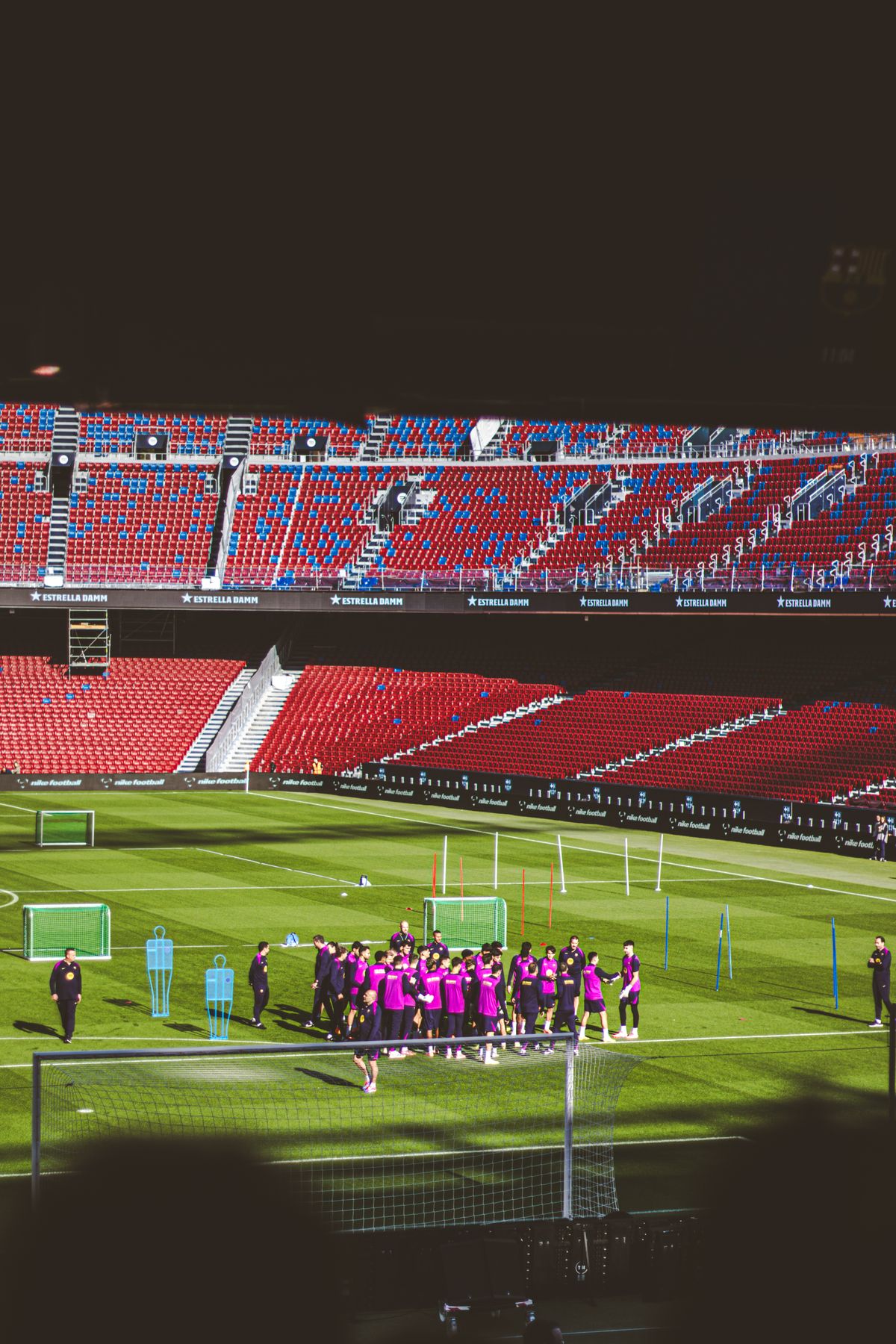
A modern stadium concourse. Reasonable adjustments in sport span seating, ticketing, routing and sensory provision, and they've been tested in real cases. Photo: Pexels (free to use).
If you run a venue, a club, a festival or a production company, you've probably heard the phrase “reasonable adjustments” more times than you can count. Most organisations understand they have a duty. Far fewer understand what a good one looks like in practice.
A reasonable adjustment is a change an organisation makes so a disabled person can use its services on the same terms as everyone else. The duty sits under the Equality Act 2010 and it applies to every service provider in England and Wales, from a Premier League stadium to a 200-capacity music venue.
The key word is “reasonable”. The Act doesn't require you to do everything possible. It requires you to do what's reasonable in your circumstances, and the Courts have spent over a decade refining what that means through real cases.
There's a second part that catches organisations out. The duty is anticipatory. You can't wait for a disabled customer to ask for an adjustment and then decide whether to provide it. You're expected to think ahead, identify the barriers in your service, and have adjustments ready. That's the part most venues get wrong, and it's the part that ends up in Court. We cover what happens when that failure leads to a claim on our page on failure to make reasonable adjustments compensation.
What “Reasonable” Means in Practice
Courts look at a cluster of factors when deciding whether an adjustment was reasonable. None of them is decisive on its own. They include:
- Whether the adjustment would actually remove the barrier the disabled person faced
- How practical it is to make the change
- The financial and other costs, set against the organisation's resources
- How much disruption the change would cause
- What your organisation has already done about accessibility
- What guidance or recognised good practice exists for your sector
A Premier League club with £500m turnover can't tell a Court that installing a working hearing loop was too expensive. A small grassroots venue isn't held to the same standard, but it's still expected to have done the thinking and made the changes it reasonably can.
The duty scales with your organisation. What stays constant is the expectation that you've thought about it, planned for it, and can show your reasoning.
Reasonable Adjustments Examples in Sport
Sport has some of the clearest examples because the barriers are physical, procedural and financial, and they've been tested in real cases.
Accessible seating that isn't segregated. A common failure is the “accessible section” tucked in a corner with a restricted view, away from the main support. A reasonable adjustment is to provide accessible seating across different price points and locations, so disabled fans can sit with the people they came with and get a comparable view to non-disabled fans paying the same price.
Companion ticketing. A free companion ticket isn't a legal entitlement under the Equality Act 2010, and the Act doesn't prohibit charging for companions. The question is whether a disabled fan is put at a substantial disadvantage. If a companion is the only way the fan can access the service, so the companion is the adjustment that removes the disadvantage, a free companion ticket is likely the reasonable adjustment. If the service is already accessible and the companion is attending by choice rather than necessity, a free ticket isn't automatically required. Several sports bodies offer free companion tickets, but the right answer depends on the access needs of the individual and how accessible the service already is, not on a blanket rule. We set out the full position in our article on companion ticket policy.
Step-free routing that doesn't send disabled fans round the back. I've worked on cases where the only accessible route to a seat was through the service yard, past the bins, through the kitchen. That isn't an adjustment, it's a segregation. A reasonable adjustment is a step-free route through the main concourse, with the same signage and dignity as every other route.
Sensory rooms for neurodivergent fans. A growing number of clubs now offer sensory rooms with adjustable lighting, quiet space and trained staff. For a club with the resources, this is moving from innovative to expected. For smaller clubs, a quiet area with reduced stimuli and clear staff training is a reasonable starting point. The operational question of who can use a sensory room, including requests from self-diagnosed guests, is covered in our article on self-diagnosis and sensory rooms.
Reasonable Adjustments Examples in Music
Music venues and festivals have their own patterns of failure, mostly around booking, stewarding and information.
Accessible ticketing that actually works. The booking system is often the first barrier. If a disabled fan has to phone a number that's only answered between 10 and 4, or email an address that takes a week to reply, they've already missed the release. A reasonable adjustment is an accessible booking channel that opens at the same time as general sales, with staff trained to handle access requests.
Accessible viewing platforms with companion space. Standing-only gigs and festivals regularly fail disabled fans who can't stand for hours. A reasonable adjustment is a raised viewing platform with space for a companion, sited so the view is comparable to the best general positions. The platform shouldn't be at the back of the field behind the sound desk.
Steward training that goes beyond “help if asked”. Stewards are usually the first point of contact when something goes wrong. A reasonable adjustment is trained, briefed stewards who know where the accessible routes are, who can guide a wheelchair user without grabbing the chair, and who know not to distract or separate a working assistance animal, and not to challenge a customer's word on whether their animal is working. Untrained stewards who default to “you'll have to wait here” turn a manageable situation into a discrimination claim.
Sensory adjustments for deaf and hard of hearing fans. Hearing loops at the box office and in the venue are a basic reasonable adjustment. For festivals, BSL interpretation on the main stage and accessible viewing positions near the interpreter are now expected at larger events.
Theatres and entertainment venues face a mix of physical and procedural barriers. Step-free access to all customer areas, not just the auditorium, is a reasonable adjustment. Photo: Pexels (free to use).
Reasonable Adjustments Examples in Entertainment
Theatres, cinemas and live entertainment venues have a mix of physical and procedural barriers that show up in cases every year.
Captioned, audio-described and relaxed performances. A single captioned performance a year isn't an anticipatory adjustment, it's a token. A reasonable programme is a regular schedule of accessible performances across the run, advertised clearly on the venue's website and booking platform, with tickets available through the same channels as every other performance.
Accessible booking that doesn't require proof every time. Some venues require disabled customers to send medical evidence for every booking. A reasonable adjustment is a system that recognises a customer's access needs once, records them securely, and applies them to future bookings. Requiring evidence each time creates a barrier that non-disabled customers don't face. We set out the wider case for focusing on what a customer needs rather than demanding proof in our article on asking the right question.
Step-free access to all customer areas, not just the auditorium. A venue that has step-free access to the stalls but not to the bar, the accessible toilet, or the meet-and-greet area hasn't made a reasonable adjustment. They've made a partial one that falls apart the moment the disabled customer wants the same experience as everyone else.
Assistance animal provisions. Refusing entry to an assistance animal, or requiring the animal to be left in a holding area, is a classic failure. A reasonable adjustment is a clear policy that welcomes assistance animals, a water station, a designated relief area, and staff who know not to touch or distract the animal.
Reasonable Adjustments Examples in Live Events
Conferences, exhibitions, trade shows and corporate events have their own patterns, often around registration, wayfinding and breakout sessions.
Accessible registration and seating. Online registration forms that don't allow a customer to specify access needs, or that require them to phone a separate number, create a barrier at the first step. A reasonable adjustment is an access field in the standard form, a named contact who follows up, and seating in sessions that accommodates wheelchair users, companions and assistance animals in positions with a comparable view.
Quiet rooms and retreat spaces. For large events, a quiet room is a reasonable adjustment for neurodivergent attendees and those who need to manage medication or rest. It needs to be a genuine quiet space, not a corner of the catering area.
Accessible materials and presentations. Slides in high-contrast formats, captions on video content, large-print programmes available on request without a wait, and BSL interpretation on request with enough lead time. These are all standard reasonable adjustments for events of any scale.
Evacuation planning that includes disabled attendees. Personal Emergency Evacuation Plans (PEEPs) aren't just for staff. For events, a reasonable adjustment is a system that identifies attendees who need help evacuating, records their location, and assigns trained staff. Generic evacuation plans that assume everyone can use the stairs fail disabled attendees the moment the alarm goes off.
Waiting for a complaint before making a change isn't an anticipatory duty, it's a complaints procedure.
Common Failures to Avoid
Most failures I see in cases fall into a small number of patterns. Here's what to watch for.
The “one route” assumption. Providing one accessible route, one accessible toilet, one accessible seat. If that one provision is already in use, or out of order, or in the wrong location, the disabled customer has no fallback. Reasonable adjustments need redundancy built in.
The policy that wasn't checked. Pricing policies, ticketing policies, companion policies and T&Cs are the most common source of claims. A reasonable adjustments review should start with your policies, not your building. We look at what happens when these policies aren't checked in our guide to failure to make reasonable adjustments compensation.
The untrained front line. Stewards, box office staff, reception teams and security contractors are where the duty meets the customer. If they haven't been trained on what a reasonable adjustment is and what your organisation provides, the policy on paper doesn't exist in practice.
The reactive mindset. Waiting for a complaint before making a change isn't an anticipatory duty, it's a complaints procedure. The Courts have been clear that the duty requires forward planning, not a reactive response after a disabled customer has already been disadvantaged.
The documentation gap. Organisations that have done the work but can't show it lose cases they should win. Keep records of your access reviews, your training, your policy decisions and your reasoning. If you considered an adjustment and decided against it, write down why. That's your evidence that the decision was reasonable.
How to Decide What's Reasonable for Your Organisation
The practical answer is a structured access review, done by someone who knows your sector and the law. Start with the customer journey, from booking to leaving the venue, and identify every point where a disabled customer could face a barrier. For each barrier, work through the factors the Courts use: would the adjustment remove the barrier, what does it cost, what's your resource, what's the disruption, what's the recognised good practice.
Document the decisions. Act on the ones you can. Plan the ones you can't do immediately, with a realistic timescale. Review the whole thing at least annually, because caselaw and good practice move quickly.
This is the work Strategic Access Advisory does with sport, music, entertainment and live events organisations every day. Our Disability Impact & Risk Assessment is built specifically for this, translating the legal duty into a structured, defensible review.
Book a discovery call
We'll walk through your current customer journey, identify the gaps, and give you a clear, defensible plan for your reasonable adjustments.
Get in TouchAbout the author
Chris Fry leads Strategic Access Advisory Limited, a specialist accessibility consultancy based in Sheffield. Chris has decades of experience in Courts, including the Court of Appeal and Supreme Court, translating the Equality Act 2010 into operational improvements for venues, sports organisations, entertainment companies, and live events businesses.
For enquiries about reasonable adjustments reviews, operational accessibility audits, or subscription support, contact Strategic Access Advisory Limited directly via strategicaccessconsulting.com.
Sources and references
- Equality Act 2010, sections 20, 21 and 29 (reasonable adjustments duty for service providers)
- Equality and Human Rights Commission guidance on the anticipatory reasonable-adjustments duty
- EHRC Statutory Code of Practice for Services, Public Functions and Associations (in force 5 August 2026)
- Nimbus Access Card scheme guidance on disability verification and access needs
- Sector guidance from the National Register of Access Consultants (NRAC) and Disability Law Association
This article provides general legal and operational information and isn't legal advice on any particular circumstances. If you need advice on your organisation's specific situation, seek independent legal counsel.